
Weeknight dinners can be such a drag, right? You want something healthy, fast, and honestly, something that doesn’t leave you scrubbing burnt cheese off a pan for an hour. That’s why I’m so obsessed with cooking fish using steam—it’s pure magic! This baked fish technique seals in all the flavor and moisture, which is why my go-to is definitely Salmon En Papillote. Seriously, when those little parchment bundles hit the table, I feel fancy, even though it took me ten minutes of actual work. Trust me, this method guarantees perfectly tender salmon every single time!
Why You Will Love This Salmon En Papillote Recipe
Why bother with all that messy pan-searing when you can just fold it up and bake it? This method is a total game-changer for busy weeknights. Here are the top five reasons I keep coming back to my Salmon En Papillote recipe:
- It’s Crazy Fast! Seriously, prep time is about ten minutes, and then these packets go right into a 400-degree oven. Dinner is on the table in under 25 minutes total. I barely have time to set the table before they’re done!
- Flavor Infusion is Next Level. Because everything is trapped inside that little parchment pouch, the lemon, the dill, and the broth steam right into the salmon. You get incredible, natural flavor without adding tons of sauce or fat.
- Clean-Up Is a Dream. This is my favorite part! You bake right on the parchment paper—which you can decorate, by the way—and then you just toss the paper when you’re done. No scrubbing fish residue off a baking sheet! You’re welcome.
- It’s Health Food That Tastes Decadent. We’re talking low fat here, relying on healthy olive oil and the natural moisture from the fish and veggies. You get that rich, buttery taste experience without, well, all the butter!
- Perfect Portions Every Time. Since you build these packets individually, you know exactly what everyone is getting. It makes portion control super easy, though I have to hide my second fillet sometimes before I package it up!
Essential Ingredients for Perfect Salmon En Papillote
This recipe keeps the ingredient list short because we want the salmon and the steam to be the stars, not a million spices getting in the way. Honestly, the quality of your salmon matters most here. Get the best fillets you can find—I always look for bright pink, firm salmon because it holds up beautifully in that hot, steamy packet.
Here’s what you need for two happy diners. Don’t skimp on that fresh dill at the end, that’s where the bright, fresh finish comes from!
- Two gorgeous salmon fillets, about six ounces each.
- One whole lemon, sliced super thin—we need those citrus disks to lay right on top!
- One cup of asparagus spears, make sure you trim off those woody bottoms first, please.
- Half a cup of cherry tomatoes, just halved so they release their sweet juices quicker.
- Two tablespoons of white wine or broth—I usually grab chicken broth if I don’t have leftover wine open.
- One tablespoon of olive oil—just a good everyday one, nothing fancy.
- Salt and fresh black pepper, taste testing is encouraged here!
Ingredient Notes and Substitutions for Salmon En Papillote
I love that the veggies are flexible in this recipe, too. If you aren’t loving asparagus this week, absolutely swap it out! Thinly sliced zucchini or even some colorful bell peppers work wonderfully in that little vegetable bed where the salmon lays. Just try to keep the vegetable pieces somewhat uniform so they cook nicely alongside the fish.
Now, a quick word on thickness: be mindful of your fillets. If yours are extra chunky—say, over an inch and a half thick—you might want to bump that baking time up by three or four minutes. Always check that center with a fork, that’s the real way to tell if baked fish is done to your liking. It should flake beautifully!
Equipment Needed for Making Salmon En Papillote
Okay, listen up, because the magic of this recipe hinges on two main things: the folding technique and having the right paper. You don’t need fancy pots or specialized steam baskets; we’re keeping this minimalist. The most important piece of equipment you absolutely must have is parchment paper. I’m talking real parchment, not wax paper!
Wax paper will melt and stick to your fish, creating a gummy, sad mess. We need that silicone-coated parchment that can handle baking temperatures up to 400 degrees without fusing to the food. You need two large sheets, about fifteen inches long each. If your sheets aren’t big enough, your seal won’t hold, and all that flavorful steam escapes!
Beyond the paper, grab these simple kitchen basics:
- A sturdy baking sheet. You’ll assemble the packets right on top of it, so make sure it fits easily into your oven.
- A sharp knife for slicing those lemons thinly and trimming the ends off your asparagus spears.
- A small bowl if you want to whisk your wine/broth and olive oil together first, but honestly, I just drizzle it straight from measuring spoons.
- A good pair of kitchen shears if you need to trim your parchment paper down after you’ve crimped the edges closed.
That’s it! No mixer, no whisk, just simple tools for a ridiculously flavorful dinner. It’s the easiest clean-up in the world, trust me.
Step-by-Step Instructions for Salmon En Papillote
Get your oven ready first thing! We want it scorching hot at 400 degrees Fahrenheit. We’re building little birthday presents for ourselves out of parchment paper, so pull out two big squares—I like mine about 15 inches long so I have plenty of room to fold and crimp without tearing anything later.
Start by laying your veggies down in the center of each paper sheet. Toss your trimmed asparagus spears and those halved cherry tomatoes down first. They make a little bed for the fish to rest on. Then comes the main event: place one lovely salmon fillet right on top of those veggies on each sheet.
Now we season! Sprinkle salt and pepper onto the salmon generously. Then, lay those thin slices of lemon right over the top of the fish. This is where the flavor really starts building. Next, drizzle one tablespoon of your white wine or broth over each portion, followed by half a tablespoon of olive oil. Make sure it hits both the fish and the veggies!
Once everything is tucked in, it’s time to seal them up tight. This is crucial for the Salmon En Papillote method to work. Bake these packets for 12 to 15 minutes. If your salmon is super thick, check at 15 minutes, but usually, that’s all it takes for perfectly flaky baked fish.

Tips for Sealing Your Salmon En Papillote Packets
Don’t just flop the paper over! We are trapping steam like a pressure cooker in miniature here, and that steam is what cooks the fish gently and keeps it impossibly moist. Fold the long edges together first, bringing the top piece of parchment right over the bottom piece to create that half-moon shape. Take your time crimping!
Start at one end and make small, overlapping folds—think like you’re folding a fancy, flat envelope. Make sure each fold is pressed down firmly against the sheet pan. You want zero gaps or holes in the seam. If you see steam escaping during the first few minutes of baking, you need to press those edges tighter next time! This tight seal is the secret to getting that incredible, infused flavor where the lemon and dill permeate every single bite.
Serving Suggestions for Your Salmon En Papillote
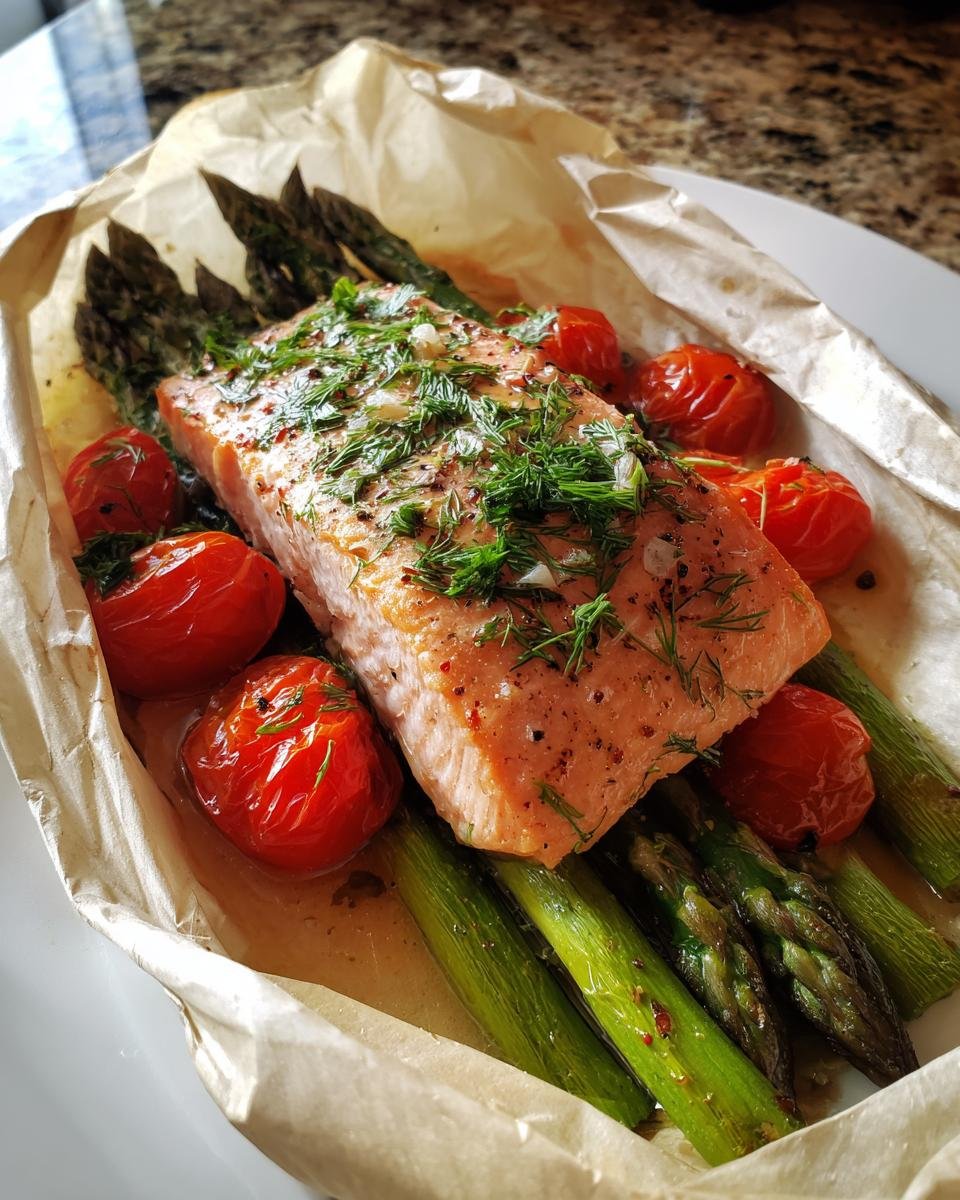
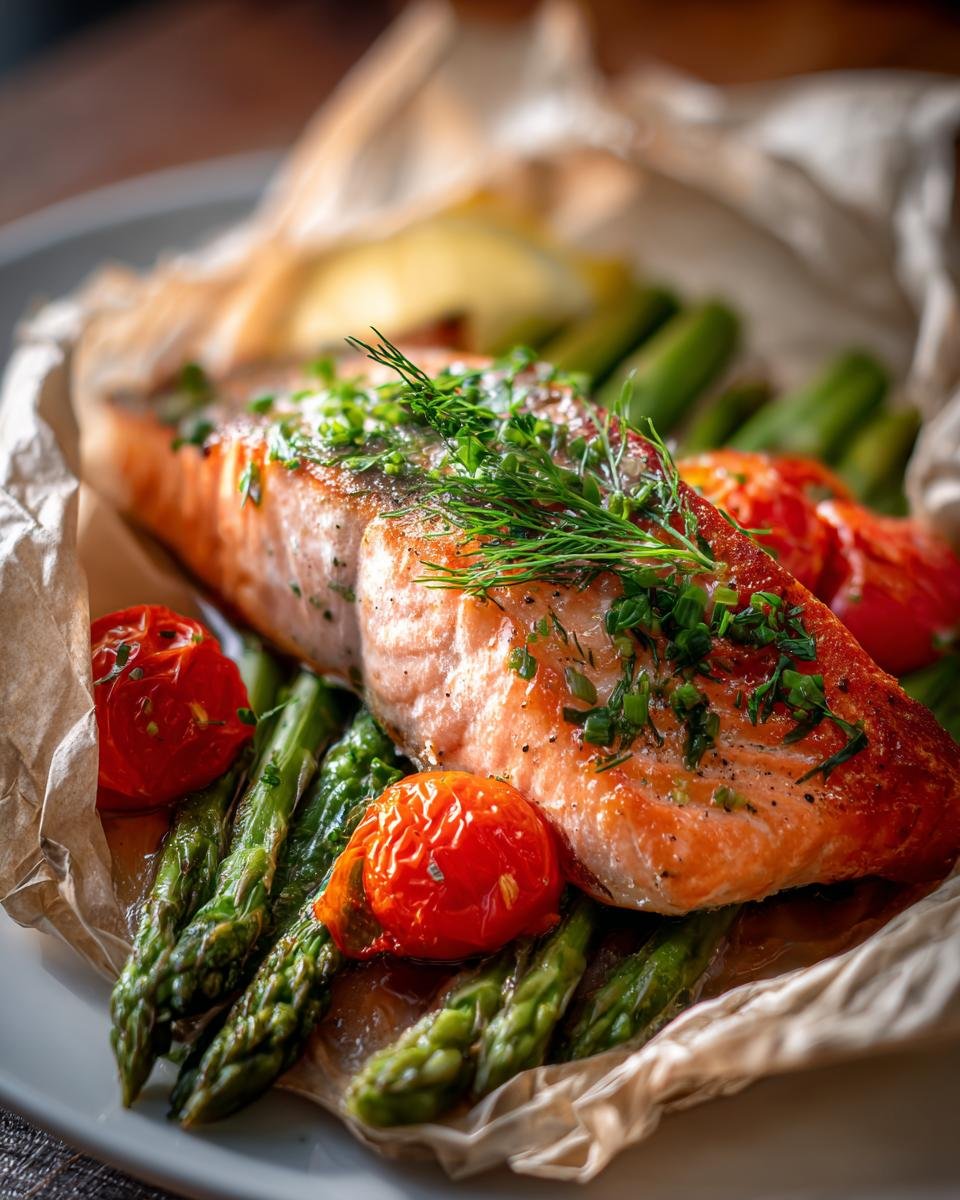
Presentation is half the fun with this dish! Part of the joy of Salmon En Papillote is the dramatic reveal right at the dinner table. Carefully transfer the hot packets onto serving plates—use tongs or a spatula, they are steamy hot! Then, instruct everyone to carefully snip open their packet with scissors or a fork. When they slice into it, a gorgeous cloud of herb-scented steam erupts. It’s instant gourmet dining, even on a Tuesday!
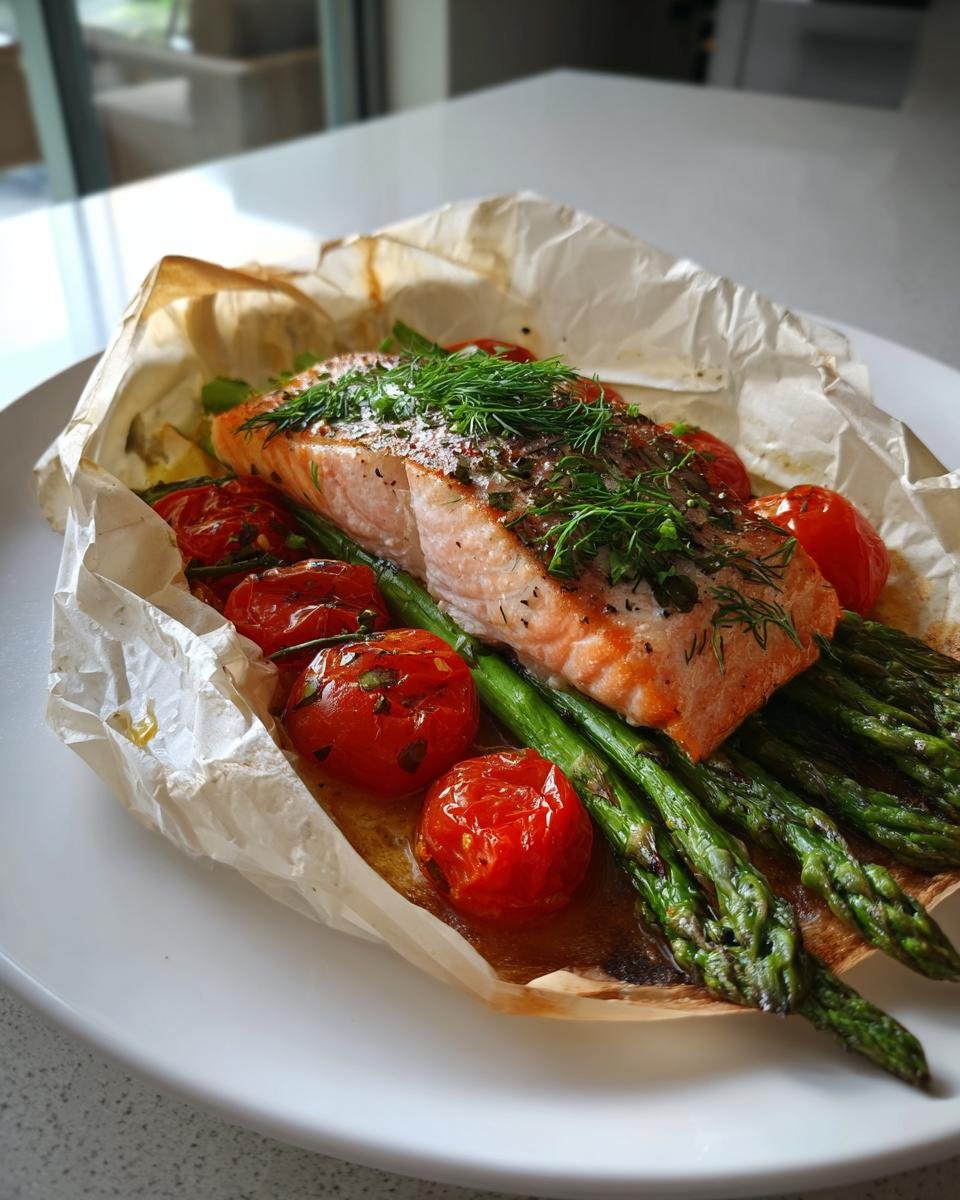
Since the salmon pretty much cooks its own vegetable components (the asparagus and tomatoes), you want sides that are light and won’t compete with those bright lemon and dill notes. I usually keep things simple so the fish remains the shining star of the plate.
For a starch, honestly, you can’t beat a simple side of fluffy couscous. It’s so fast to make, and it soaks up any tiny bit of extra cooking liquid that might seep out of the parchment packet. If you happen to have leftover roasted potatoes from the night before? Even better; just reheat them briefly!
If you’re focusing on keeping it low-carb, or just want more green on the plate, I highly recommend pairing this with something crisp. A simple vinaigrette tossed salad works perfectly, or if you’re feeling ambitious, you could whip up some quick green beans. For something fancier, I swear by a quick side of grilled vegetables—you can find some great inspiration for those over on my grilling post. But honestly? A little crusty bread to mop up the plate juices is sometimes all you need. Enjoy that beautiful, steamy presentation!
Storage and Reheating Instructions for Leftover Salmon En Papillote
Now, I’ll admit something: sometimes these packets are so perfectly portioned that there are no leftovers! But hey, life happens, and sometimes a chef (that’s you!) is just too full. If you happen to have any cooked salmon and veggies left over, don’t just toss them! They taste fantastic cold the next day on a big salad, but if you want them warm, you need to treat them right.
First and most important rule for leftovers: ditch the parchment paper! Once you open that packet, the environment inside changes, and the paper isn’t designed for long-term storage. It will just get soggy and might actually stick to the remaining food. Scoop out the cooked salmon and vegetables and pop them into a clean, non-see-through, airtight container. Plastic or glass works great, just make sure it seals well.
When you’re ready to enjoy your second helping of Salmon En Papillote, forget about putting the whole packet back in the oven. Reheating that paper just dries out the fish. Keep it quick and gentle!
The Best Way to Reheat the Salmon
My absolute favorite method for reheating fish is on the stovetop, but using a tiny bit of moisture to bring it back to life. Grab a small non-stick skillet—one that won’t scorch the delicate vegetables. Add just a teaspoon of water or an extra splash of broth right into the pan. Place the leftovers in the pan over medium-low heat. Cover the skillet immediately!
Covering it traps a little steam, which mimics the original cooking environment and keeps the salmon from turning rubbery. It only takes about three to four minutes, tops. Give it a gentle stir once halfway through. If you must use a microwave, use 50% power in very short 30-second bursts just until warmed through. The stovetop is faster and tastes way better, trust me on this one!
Frequently Asked Questions About Salmon En Papillote
I get so many questions about this recipe, and honestly, that’s the sign of a truly great cooking method! People see how easy it is and start wondering how flexible it can be. Don’t worry, your parchment paper cooking doesn’t have to be rigid; you can tweak this to fit whatever you have on hand. Here are the top things people ask me about making perfect Salmon En Papillote.
Can I use aluminum foil instead of parchment paper for this recipe?
You absolutely *can* use aluminum foil, but I really don’t recommend it if you want that signature tender texture. Foil conducts heat much faster than parchment paper. When you wrap fish in foil, it tends to cook a little more aggressively, and you lose that gentle steaming effect that parchment creates. If you do use foil, make sure the creases are really sealed well, and watch your time—your baked fish might cook a minute or two quicker!
What if my salmon fillet is much thicker or much thinner than the recipe suggests?
This is super important, especially when relying on a time estimate! If your fillet is a monster, maybe an inch and three-quarters thick, you’ll need to extend the baking time for that fish to cook all the way through properly. I’d start checking at 15 minutes, but don’t be surprised if you add five more. For skinny fillets, say half an inch thick, cut that time down! They might be done in 10 minutes flat. Always rely on visual checks—flaking easily with a fork—over the timer if the cut size varies a lot.
Are there other herbs or aromatics I can use besides dill and lemon?
Oh my gosh, yes! Dill and lemon are my classic French pairing, but this method is begging for experimentation. If you are more of a rosemary person, throw a tiny sprig right on top of the salmon before sealing. Thyme also works beautifully. You could swap out the wine/broth for an ounce of dry vermouth for an even deeper herbal note! Even adding a thin sliver of fresh ginger alongside the lemon can give the steam a wonderful Asian-inspired warmth. Just make sure whatever you add is thinly sliced or chopped finely so it releases its flavor quickly.
How do I make sure my vegetables are tender when the salmon is done?
That’s a great question because asparagus can sometimes be crunchy while the salmon overcooks! The trick is layering. We put the heartier stuff—like the asparagus—down first, right against the parchment paper, as it needs slightly more direct heat. The cherry tomatoes go in next. Since we cut them in half, they soften up just perfectly while generating a little extra moisture for the steam bath. If you wanted to add something really tough, like a tiny chunk of carrot, you should blanch those veggies for 30 seconds in boiling water before wrapping them up. But for asparagus and tomatoes? The method in the recipe is perfect!
Estimated Nutritional Information for Salmon En Papillote
I always get asked about the nutrition because people expect a dish this flavorful to be loaded with heavy cream or butter—and that’s the beauty of Salmon En Papillote! Because we’re essentially braising the fish in its own delicious juices and a tiny bit of white wine, we skip a lot of heavy oils or fats. I pulled together the estimates based on the portions listed in the recipe, but please remember these are just general guides!
These numbers reflect one fillet serving as described in the instructions, utilizing the olive oil and broth as listed. If you skip the oil or use more broth, the fat content changes quickly! As always with home cooking, the final nutrition depends on the thickness of your salmon cut and the exact brand of broth you use.
Here is a breakdown of what you can generally expect from one serving:
- Serving Size: 1 fillet
- Calories: Approximately 350 calories
- Protein: A whopping 38 grams! This is why salmon is such a fantastic centerpiece for dinner.
- Fat: Around 18 grams total fat. What’s great is the vast majority of that is unsaturated fat—the healthy kind, coming in at about 15 grams.
- Saturated Fat: Relatively low, just about 3 grams.
- Carbohydrates: Very minimal, right around 10 grams, most of which comes from the vegetables like the asparagus and the onions if you add any.
- Fiber: About 3 grams from our veggies.
- Cholesterol: Around 105 mg.
It truly is a fantastic, well-rounded, low-fat meal that feels way more complicated than it actually is. Now you can enjoy that incredible flavor knowing exactly what you’re eating!
Share Your Experience Making Salmon En Papillote
Okay, my friends, that’s the whole secret sauce—or should I say, the whole steaming packet process—for making restaurant-quality Salmon En Papillote right in your own kitchen! I have given you all my best tips for getting that fish perfectly tender, ensuring those veggies steam beautifully, and, most importantly, keeping the clean-up non-existent!
Now, the recipe is yours! I want to hear all about it. Did you use fresh thyme instead of dill? Did your kids actually eat the asparagus because it came in a fun little paper package? Don’t leave me hanging!
Head down below and leave me a star rating—five stars if you think this should be your new standard weeknight meal, but I want to see those honest scores! More importantly, drop a comment sharing any fun variations you tried, or how you managed to sneak in extra veggies. Seriously, hearing from you all always gives me new ideas for my next batch!
If you took a beautiful picture of those steamy packets just before you sliced them open, please share it on social media and tag me! Lets spread the word that healthy dinner doesn’t have to mean boring dinner. Happy cooking, and I can’t wait to read your triumphs!
Print
Salmon En Papillote
- Total Time: 25 min
- Yield: 2 servings 1x
- Diet: Low Fat
Description
A simple method for cooking salmon fillets in parchment paper packets with vegetables and seasonings.
Ingredients
- 2 salmon fillets (about 6 oz each)
- 1 lemon, thinly sliced
- 1 cup asparagus spears, trimmed
- 1/2 cup cherry tomatoes, halved
- 2 tablespoons white wine or chicken broth
- 1 tablespoon olive oil
- Salt, to taste
- Black pepper, to taste
- Fresh dill, chopped, for garnish
Instructions
- Preheat your oven to 400 degrees Fahrenheit (200 degrees Celsius).
- Lay out two large pieces of parchment paper, about 15 inches long.
- Divide the asparagus and tomatoes between the two pieces of parchment paper, centering them on the paper.
- Place one salmon fillet on top of the vegetables on each sheet.
- Season the salmon with salt and pepper.
- Top each fillet with half of the lemon slices.
- Drizzle 1 tablespoon of wine or broth and 1/2 tablespoon of olive oil over each packet.
- Fold the parchment paper over the salmon and vegetables to create a tight seal, crimping the edges securely to form a half-moon shape.
- Place the packets on a baking sheet.
- Bake for 12 to 15 minutes, or until the salmon is cooked through and flakes easily with a fork.
- Carefully transfer the packets to plates. Open them at the table to release the steam.
- Garnish with fresh dill before serving.
Notes
- You can substitute other firm vegetables like zucchini or bell peppers for the asparagus and tomatoes.
- Cooking time may vary based on the thickness of your salmon fillets.
- Prep Time: 10 min
- Cook Time: 15 min
- Category: Dinner
- Method: Baking
- Cuisine: French
Nutrition
- Serving Size: 1 fillet
- Calories: 350
- Sugar: 3
- Sodium: 250
- Fat: 18
- Saturated Fat: 3
- Unsaturated Fat: 15
- Trans Fat: 0
- Carbohydrates: 10
- Fiber: 3
- Protein: 38
- Cholesterol: 105
Keywords: salmon, papillote, parchment paper, baked fish, healthy dinner, lemon, asparagus