
Oh, thank goodness for cauliflower rice! Seriously, I was making way too many keto swaps that just tasted… sad. For ages, I thought I had to choose between healthy side dishes and actually enjoying my dinner. When I first tried making my own, I thought the food processor was magic, but nope! I ended up with watery mush every single time. I swear, I almost threw my old processor out the window!
But I figured it out, I really did! Now, I want to share the surefire way on how to make and store cauliflower rice so it’s perfectly fluffy, light, and never watery. If you follow just one or two of my little secrets here, you’ll never look at that bag of frozen stuff again. Trust me, this convenience hack is a game-changer for weeknight meals.
Why You Need To Master How To Make And Store Cauliflower Rice
Honestly, once you nail the technique, you realize how much money and time you save. Who needs those overpriced bags from the freezer aisle?
- You get that fantastic, fluffy texture every time—no sad, soggy piles on your plate.
- It’s the ultimate low-carb rice substitute, perfect for keeping dinner light and happy.
- It streamlines your life! Meal prep becomes a breeze when you have a week’s worth of base ready to go.
- Plus, when you process a whole head, it costs next to nothing compared to buying it pre-riced. If you’re looking for other ways to keep things low-carb, check out this recipe for Keto Cauliflower Mac and Cheese!
Gathering Ingredients For How To Make And Store Cauliflower Rice
This recipe truly proves that sometimes, the simplest things are the best! You only need one main item, which is fantastic for those evenings when you think you have nothing in the fridge. It’s almost silly how easy the shopping list is.
- 1 medium head of cauliflower—make sure it feels firm! We are using the whole thing.
That’s it! No sad little packets of dried herbs or specialty oils needed for this fundamental step. We just need that beautiful, crisp cauliflower head ready to be transformed.
Step-by-Step Instructions: How To Make Cauliflower Rice
This is where the magic happens, but you have to be careful! If you treat your food processor like a smoothie blender, you’re going to end up with soup, and nobody wants soup when they asked for rice substitute, right? We want light, fluffy grains!
Prepping the Cauliflower: Trimming and Cutting
First thing’s first, we attack that giant head of cauliflower. Rip off all those chunky green leaves—we don’t need those, though you could totally roast those later if you want extra veggies! Cut out that thick, woody core right in the middle. Then, just chop the white parts into roughly uniform florets. Keeping them similar in size helps the processor work evenly, which is super important for consistency.
Processing Methods: Food Processor vs. Box Grater
Now for the crucial part. If you’re like me and rely on the food processor, you need to be patient. Put those florets in the bowl, put the lid on tight (trust me, I learned that lesson the hard way!), and just use the pulse button. Pulse, pulse, pulse! Don’t hold the button down. You are looking for that rice-like texture. Stop the second it looks right, or it gets mushy way too fast.

Okay, so if you don’t have a processor, don’t panic! Grab your box grater—the side with the biggest holes, usually used for cheddar cheese. Just grate the florets like you would a giant block of cheese. It takes a little more elbow grease, but the texture ends up perfect, almost like a lovely coleslaw consistency. If you prefer roasting your cauliflower instead of rice, check out my guide for Crispy Roasted Cauliflower.
Once it’s done, you can use it right away in something amazing, maybe for a batch of Roasted Garlic Mashed Cauliflower, or you can move right on to cooling and saving it for later!
Tips for Success When You How To Make Cauliflower Rice
You can follow the basic steps perfectly and still end up with rice that’s a little too damp. It all comes down to getting the little things right beforehand, which is where I learned all my hard lessons!
First off, grab the best cauliflower you can find. You want a head that feels heavy for its size and super firm. If I press the side and it feels squishy at all, I just put it back. Soft cauliflower means it has more water locked inside, and that water is going to turn into steam and make your rice soggy the second it hits the heat. Hard, dense heads work so much better!
My biggest non-obvious tip? Make sure your food processor bowl is completely bone dry before you start. If there’s even a single drop of water sitting in there from washing it, that moisture will coat the grains and mess with your texture. I usually wipe mine down with a paper towel twice, just to be safe.
The *absolute* best way, if you have a spare minute, is to use the raw rice immediately. As soon as it’s processed, I toss mine straight into a dry non-stick skillet over medium heat. If you let it sit on the counter or in a covered bowl even for twenty minutes, it starts to release moisture before you even cook it. Cooking it straight away helps dry out that surface moisture perfectly.
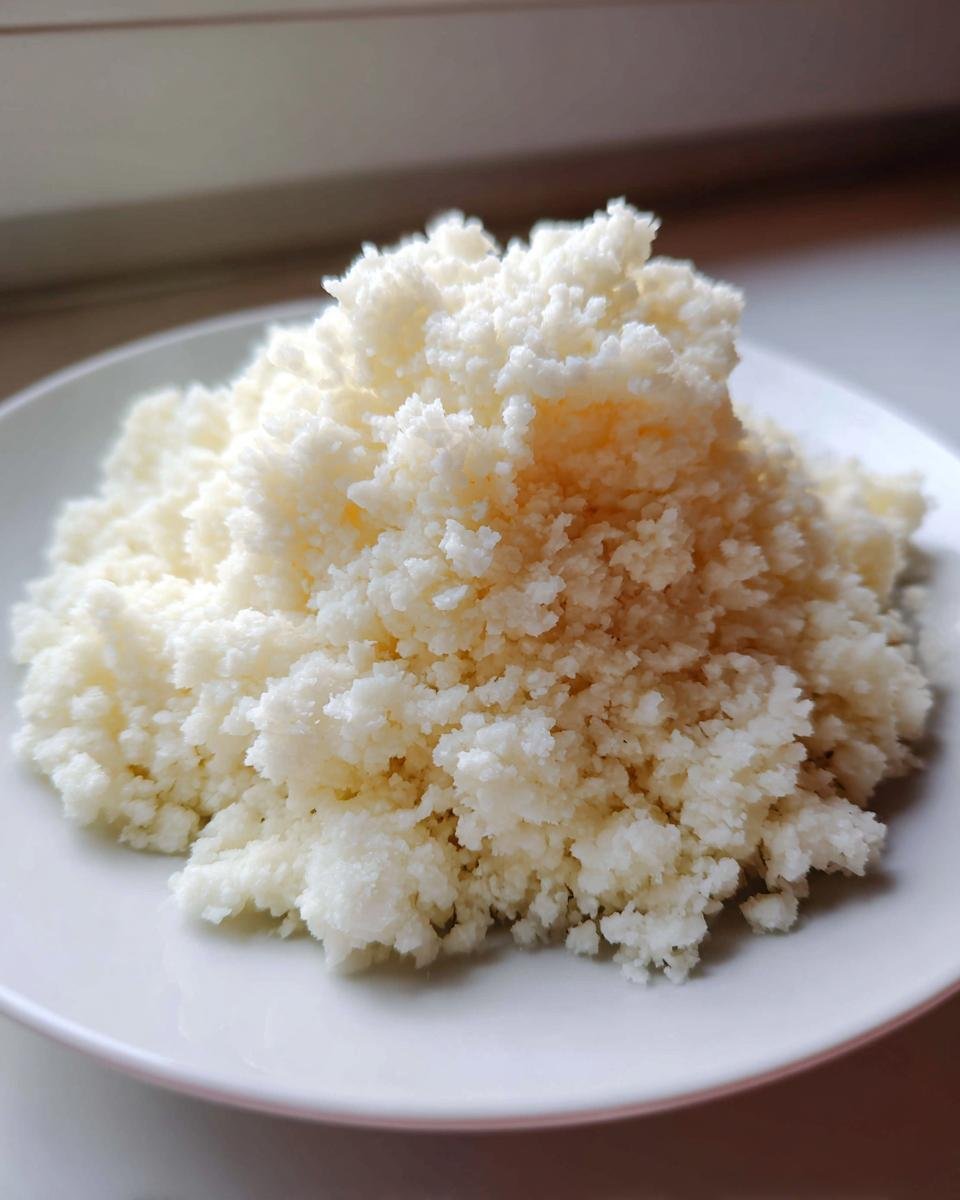
If you do use it right away, you’ll get that perfect, slightly crisp bite, which is amazing on its own or as a base for something crispy, like my Crispy Air Fryer Shrimp!
The Best Way To Store Cauliflower Rice for Later
Okay, so sometimes you process a giant head of cauliflower, and you realize you definitely made more than enough rice for tonight’s dinner. That’s fantastic! Having a stash ready to go is what makes this recipe a true meal prep hero. You want to make sure you store this properly, though, because we are trying to avoid any sliminess or freezer burn.
If you need it soon—like within the next few days—storing it raw in the fridge is the way to go. For longer breaks, we freeze it, and I have a little trick to keep it from turning into one giant frozen brick. It’s much better than buying those bags and feels more like you’re using fresh ingredients every night, almost like having my Make-Ahead Frittata Squares ready!
Refrigerating Raw Cauliflower Rice
When you’re keeping it cold, simplicity is key, but airtightness is non-negotiable. Just take your freshly processed, cool cauliflower rice and scoop it right into a container with a really tight lid. Seriously, make sure that seal is good! If air gets around the edges, the rice will start drying out and getting little hard bits, which is no fun. Properly sealed like this, it stays fresh and perfect in the refrigerator for up to five full days.
Freezing Cauliflower Rice for Long-Term Storage
Freezing is clutch for stocking up, maybe for a busy month ahead. You absolutely cannot just dump the fresh rice into a freezer bag—it freezes into one terrible, hard rock that’s impossible to break apart later. Here’s my secret: spread the raw rice evenly in a thin layer across a baking sheet lined with parchment paper.
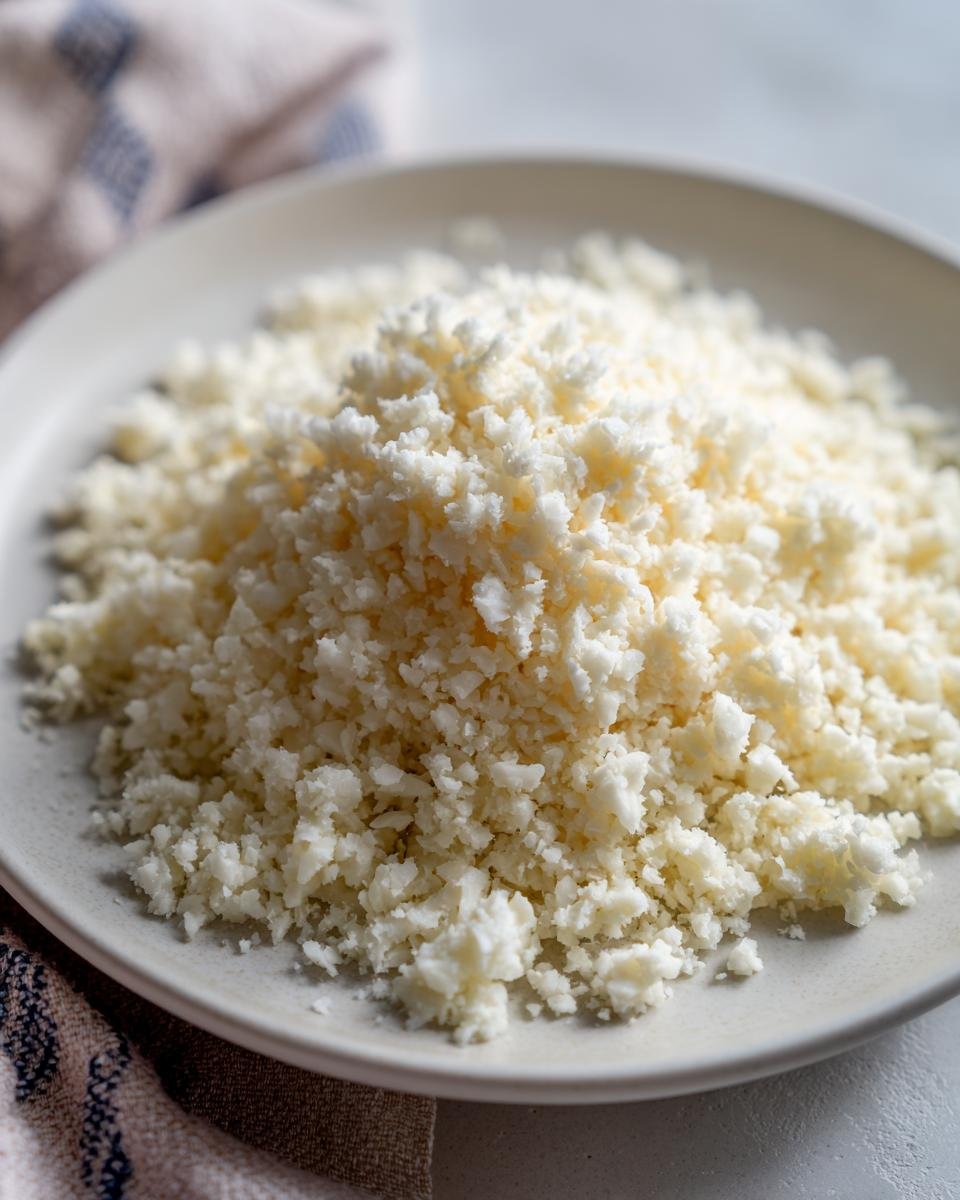
Pop that entire sheet into the freezer for about an hour until the grains are totally solid. See how they’re separate? *That’s* the key! Once they’re individually frozen, you can toss them into a heavy-duty freezer bag, squeeze out as much air as you can, and seal it up. This way, you can easily scoop out just what you need later, and it keeps beautifully for several months!
Cooking Stored Cauliflower Rice: Reheating Guide
Now that you have your stash of perfectly prepped rice—whether it came straight from the food processor or the freezer bag—you might be wondering how to cook it without turning it back into a watery mess, right? Don’t worry! Cooking stored cauliflower rice is just as easy as making it fresh, but you have to treat it a little differently to keep that great texture we worked so hard to achieve.
First things first: portion control! When you’re planning your dinner, keep in mind that about one cup of the raw rice you made equals one solid serving. So, if you are cooking for two, pull out about two cups of your stored rice.
Here is the absolute best (and easiest) way to reheat it: use a dry skillet over medium heat. I mean it, dry! Don’t add oil or butter right away. If you froze it, let it thaw a tiny bit first, or just throw the frozen rice straight in the pan if you’re in a rush.
You need to cook it just until it gets tender-crisp. This usually takes about five to seven minutes, stirring it frequently. You want to cook off any retained moisture from storage, which firms up the grains again. Once it’s heated through and feels slightly firm when you test it with a fork, it’s done! You can then drizzle in some butter or olive oil, maybe some salt and pepper, or toss it right into a flavorful dish like my recipe for Savory Chicken Fried Rice!
Ingredient Substitutions and Variations for How To Make And Store Cauliflower Rice
The beauty of starting with a blank slate of cauliflower is that you can dress it up however you like before it even hits the heat! While the technique for making and storing cauliflower rice is fantastic on its own, I love adding little flavor boosts right into the food processor. It’s the easiest way to completely change the vibe of your side dish.
If you’re making a batch just for yourself to use later, try adding half a teaspoon of garlic powder or onion powder while you pulse those florets. Turmeric is another winner—it gives the rice this gorgeous, sunny yellow color and a nice earthy background flavor. Remember which spices you add, though, especially when you’re storing it, so you know what base you’re starting with when you reheat it later!
Now, what if you are in a huge rush and you only have frozen cauliflower florets on hand? I know, I know, I sang the praises of using fresh, but sometimes life happens! If you must use frozen, you need to completely thaw the florets and then pat them bone dry with paper towels before you even think about putting them in the processor. Seriously, squeeze them dry! Frozen cauliflower holds so much more water, and if you don’t get rid of that moisture, you are guaranteed mush.
If you end up with rice that tastes a little plain after reheating, don’t forget you can level it up by tossing it into something already flavored. I love using my leftover rice base to make a quick version of Chorizo and Tomato Rice—just toss in some cooked chorizo, a little tomato paste, and some seasoning!
Frequently Asked Questions About How To Make And Store Cauliflower Rice
I know you might still have a few nagging questions floating around, especially if you’re new to making this from scratch. Dealing with vegetables in the processor can be nerve-wracking! We covered all the big points on how to make and store cauliflower rice, but here are some quick answers to the things I see people asking all the time.
Can I use pre-cut cauliflower florets to make cauliflower rice?
You absolutely can! If you buy those bags of pre-cut florets to save time, it’s fine, but you need to treat them carefully. Since they often sit around a bit longer than a head you just bought, they tend to hold onto more surface moisture. Before you toss them in the processor, I urge you to dump them in a colander, give them a good rinse under cold water even though they look clean, and then spread them out on a clean kitchen towel or paper towels. Pat them until they feel relatively dry to the touch. That extra step makes a huge difference in texture!
What is the best way to avoid mushy cauliflower rice?
This is the number one question, and it all comes down to two things: temperature and speed. First, start with cold cauliflower. Cold veggies process firmer! Second, and this is the biggie, you have to **pulse**; you cannot blend. If you hold that button down, the friction from the blades creates heat, and the moisture instantly turns to steam and turns your grains into sludge. Little short bursts, check the texture after every three pulses, and stop the second it looks like rice. Don’t aim for perfectly uniform tiny grains; aim for variety, just like real rice.
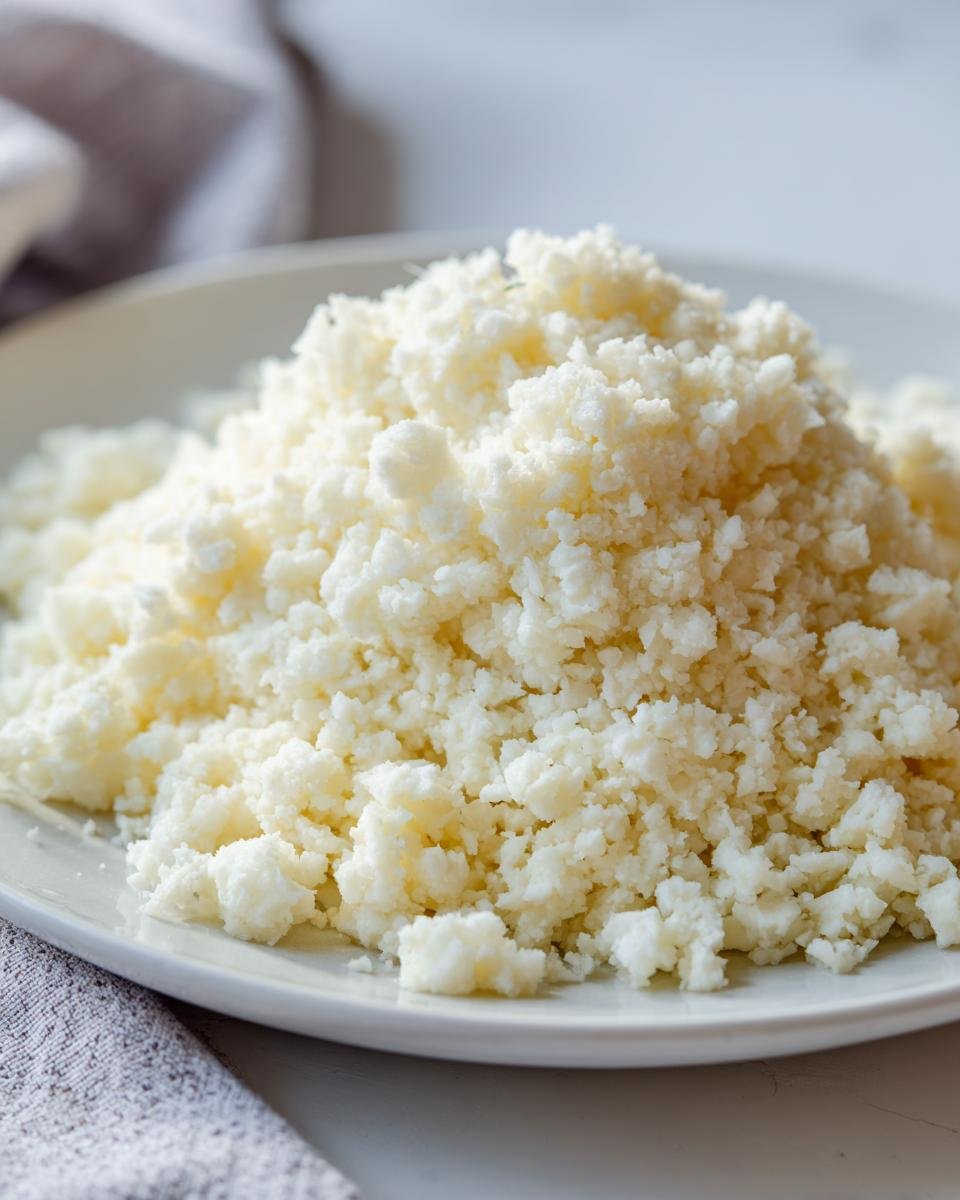
Is raw cauliflower rice a good low carb rice substitute?
Yes, it is hands-down one of the best low carb rice substitutes out there! Look at the nutrition facts—we’re talking maybe 5 grams of carbs per serving, with a good chunk of that being healthy fiber. When you need that texture for a stir-fry or a base for something saucy, it gives you all the volume without the heavy starch. It lets you enjoy meals that normally pile on the carbs, like maybe eating a small serving of this alongside something rich like my Keto Cauliflower Mac and Cheese without guilt!
Nutritional Snapshot of How To Make And Store Cauliflower Rice
Since this recipe is literally just one vegetable, the nutrition facts are super straightforward, which is part of the appeal! You get a ton of fiber and barely any fat or sugar coming from the cauliflower itself. These numbers might change slightly depending on how you cook it later—if you dump a quarter cup of butter into it, those numbers go way up!
These estimates are based on about one cup of the raw rice you make:
- Serving Size: 1 cup raw
- Calories: 25
- Fat: 0 grams
- Carbohydrates: 5 grams
- Fiber: 2 grams
- Protein: 2 grams
- Sugar: 2 grams
- Cholesterol: 0
It’s amazing how much volume you get for such low calories. It really helps fill you up!
Nutritional Snapshot of How To Make And Store Cauliflower Rice
Since this recipe is literally just one vegetable, the nutrition facts are super straightforward, which is part of the appeal! You get a ton of fiber and barely any fat or sugar coming from the cauliflower itself. These numbers might change slightly depending on how you cook it later—if you dump a quarter cup of butter into it, those numbers go way up!
These estimates are based on about one cup of the raw rice you make:
- Serving Size: 1 cup raw
- Calories: 25
- Fat: 0 grams
- Carbohydrates: 5 grams
- Fiber: 2 grams
- Protein: 2 grams
- Sugar: 2 grams
- Cholesterol: 0
It’s amazing how much volume you get for such low calories. It really helps fill you up!
Print
How To Make And Store Cauliflower Rice
- Total Time: 10 min
- Yield: 4 servings 1x
- Diet: Low Calorie
Description
Simple instructions for preparing fresh cauliflower rice and storing it for later use.
Ingredients
- 1 medium head cauliflower
Instructions
- Remove the leaves and thick core from the cauliflower head.
- Cut the cauliflower into uniform florets.
- Place the florets into a food processor.
- Pulse the florets until they resemble grains of rice. Do not over-process, or it will become mushy.
- Alternatively, use a box grater with the large holes to grate the florets.
- Use the cauliflower rice immediately or store it.
Notes
- For storage, place the raw cauliflower rice in an airtight container in the refrigerator for up to 5 days.
- You can freeze cauliflower rice for longer storage. Spread the rice on a baking sheet and freeze until solid, then transfer to a freezer bag. It keeps well for several months.
- When cooking, use about 1 cup of raw cauliflower rice per serving. Cook it in a dry skillet over medium heat until tender-crisp, about 5 to 7 minutes.
- Prep Time: 10 min
- Cook Time: 0 min
- Category: Side Dish
- Method: Food Processing
- Cuisine: General
Nutrition
- Serving Size: 1 cup raw
- Calories: 25
- Sugar: 2
- Sodium: 30
- Fat: 0
- Saturated Fat: 0
- Unsaturated Fat: 0
- Trans Fat: 0
- Carbohydrates: 5
- Fiber: 2
- Protein: 2
- Cholesterol: 0
Keywords: cauliflower rice, make cauliflower rice, store cauliflower rice, low carb rice substitute, how to process cauliflower