
You know those recipes that feel like they belong in a museum, yet somehow taste better than anything modern? Well, that’s exactly how I feel about this glorious German Marble Cake, or *Marmorkuchen* as the pros call it. People think making that perfect, dramatic swirl takes a baking degree, but trust me, it doesn’t!
This cake sits on my counter whenever I need something incredibly reliable. It’s visually stunning—that beautiful, unique fingerprint pattern, right? But what sold me on sticking to this exact method? It uses simple pantry ingredients, and the vanilla and chocolate ratios are just spot-on. I’ve tweaked a million swirl techniques since I first tried this, but this specific way of dividing and mixing the batter is the secret sauce that keeps it perfectly moist every single time. If you’re looking for a classic loaf cake that always impresses, this is the one you need in your rotation.

It’s so dependable, I even taught my neighbor how to make it after she borrowed some sugar last week. You can see my favorite swirling tips right here if you’re nervous about mixing those two batters, but honestly, this loaf recipe is foolproof. Sometimes a simple swirl is all you need!
Why This German Marble Cake Recipe Works So Well
I know there are a million baked goods out there, but this *Marmorkuchen* stands head and shoulders above the rest because it’s built on solid, simple foundations. You don’t need fancy equipment or ingredients that require a trip to a specialty store. It’s just great butter, quality cocoa, and patience for about two minutes!
This particular recipe is so reliable because it just *works*. It produces that wonderful, slightly dense crumb that feels substantial but still melts in your mouth. Plus, the way the batter divides makes the swirling foolproof. You’ll be shocked at how easy it is to get that beautiful, random pattern!
Key Benefits of Our German Marble Cake
- It uses ingredients you probably have right now – no stress about running out for a last-minute bake.
- The textures are perfect: moist enough to keep for days but firm enough to slice cleanly without crumbling everywhere.
- The blending of rich dark chocolate with sweet vanilla is the iconic, classic flavor we all crave.
- If you’re looking to expand your baking repertoire beyond plain loaves, this is the perfect next step in quick breads.
Gathering Ingredients for Your German Marble Cake
Getting started is half the fun, and I love the ingredient gathering part because this recipe is so straightforward. Forget sourcing obscure items! You’ll need one cup of nice, softened, unsalted butter—and please, use real butter here! Margarine just doesn’t give you that richness. That butter needs one cup of granulated sugar to cream up beautifully later on. We’re using four large eggs, making sure they are at room temperature because cold eggs shock the batter, and one reliable teaspoon of vanilla extract for that classic sweet smell.
For the dry stuff, grab two cups of all-purpose flour, one teaspoon of baking powder, and just half a teaspoon of salt. Simple, right? Then for the wetness, we need about half a cup of milk. Now, here’s where the fun starts for the chocolate half: You need two tablespoons of unsweetened cocoa powder—I recommend going for a darker one if you can find it for a deeper color in your German Marble Cake—mixed with two quick tablespoons of hot water to bloom that cocoa flavor right away. If you need some inspiration on working with staple pantry items, check out my tips for cheddar cheese quick bread; the approach to prepping your dry mix is similar!
Essential Equipment for Making German Marble Cake
You don’t need a commercial bakery setup! The tools required for this loaf are standard issue. The most important thing is your pan: you’ll need one standard loaf pan that you grease and flour really well—I tend to use a 9×5 inch size.
You absolutely need a sturdy mixing bowl for creaming that butter and sugar, and honestly, an electric mixer really helps here, though my grandmother did this all by hand with a strong wooden spoon! Also, have a couple of smaller bowls handy—one for whisking your dry ingredients and another tiny one for blooming that cocoa powder. Having a wooden skewer or toothpick ready for testing is crucial too. If you’re curious about how different pans affect baking, my guide on ultimate homemade cornbread touches on pan preparation similarities!
Step-by-Step Instructions for Perfect German Marble Cake
Okay, time to get our hands dirty! First things first, get that oven cranked up to 350°F (175°C). And don’t forget to grease and flour your loaf pan—we don’t want any sticky surprises! This cake relies on that initial buttering well to keep the crumb intact, much like a good pound cake,
We start with the creaming, which is essential. Beat your softened butter and sugar together until it genuinely looks light and fluffy. I mean pale yellow, almost cloud-like! Then, add your eggs, one at a time. Seriously, mix well after each egg goes in before adding the next one; this prevents the mixture from breaking. Stir in your vanilla, and boom, the wet base is done! In another bowl, you’ll whisk your flour, baking powder, and salt together—that’s our dry mix.
Now, the most crucial part to avoid a dense brick: adding dry to wet. Add the dry ingredients gradually while alternating with the milk. Remember to stop as soon as everything is *just* combined—if you see a streak of flour, that’s okay! Overmixing is the enemy of a light crumb. This entire mixing process is actually very similar to the technique I use for my buttermilk pound cake, so embrace the gentle fold!
Preparing the Vanilla and Chocolate Batters for German Marble Cake
Once your batter is mixed, you need to divide it. Pour about two-thirds of that beautiful, pale vanilla batter right into your prepared loaf pan. Don’t smooth it out too much; we need some room for the chocolate layer!
For the remaining one-third of the batter left in your bowl, this is where the magic happens. Whisk in the two tablespoons of cocoa powder and the two tablespoons of hot water until it’s smooth and deeply colored. Heat helps wake up the cocoa, giving you much better flavor. When that chocolate batter is ready, gently spoon it right over the top of the vanilla batter already sitting in the pan. See? Easy layering!
Creating the Signature Swirl in Your German Marble Cake
This step is where you become an artist! Grab a knife or, even better, a wooden skewer—it’s less likely to drag through the bottom of the pan and tear up your pretty layers. You want to gently run that knife through the batter, zig-zagging across the top. Do this maybe three or four times, going back and forth across the length of the loaf. But stop after that! Seriously, gentle is the keyword here. If you over-swirl, you just end up with brown cake, and we want distinct stripes. We’re aiming for definition, not mud!
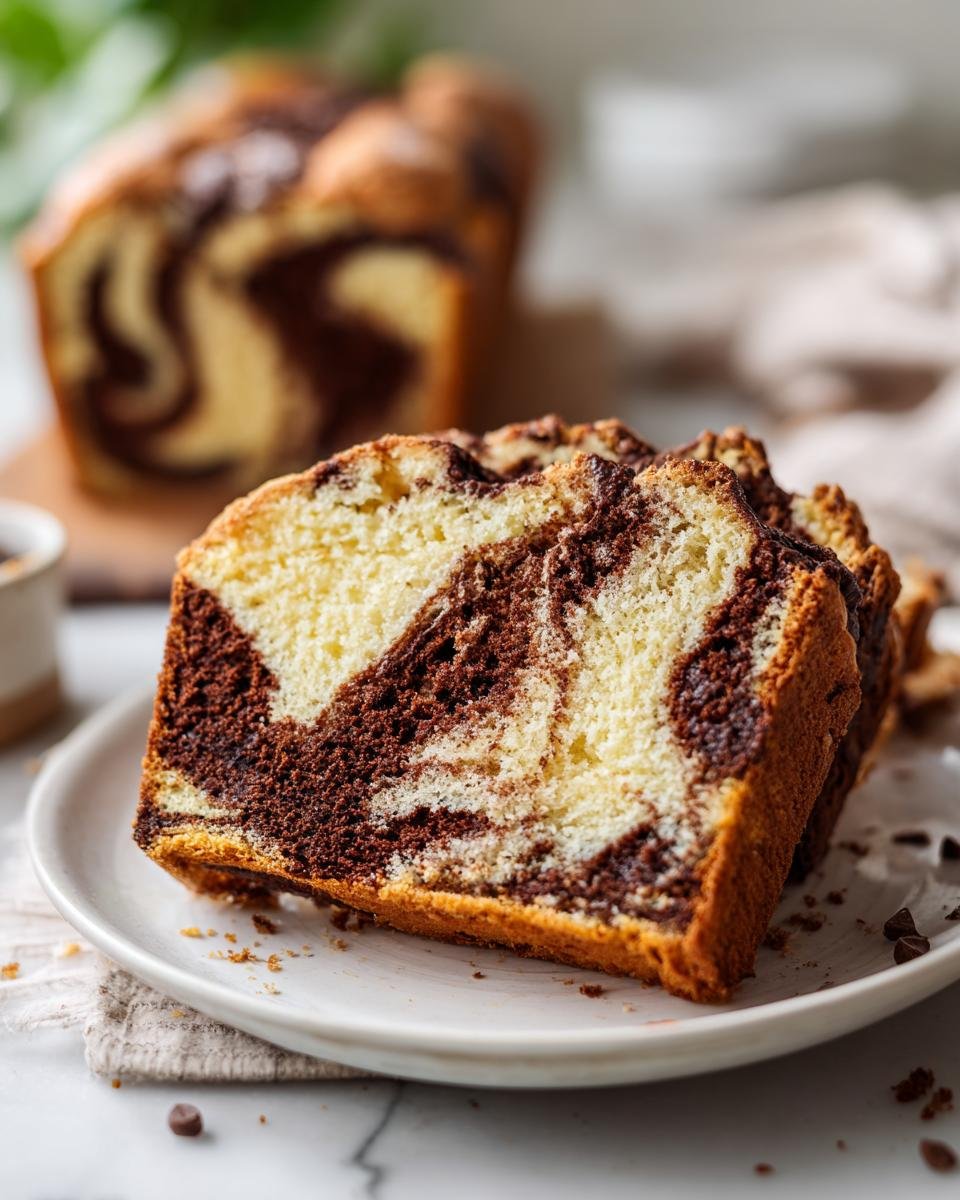
Pop that loaf into the oven for about 50 to 60 minutes. You’ll know it’s done when that skewer comes out clean. Let it sit in the pan for 10 minutes to firm up its structure before turning it out onto a rack to cool completely. If you’re playing around with different mixing methods, this one is surprisingly intuitive, sort of like my favorite blender cake when I’m absolutely rushing!
Tips for Success with Your German Marble Cake
I’ve baked this loaf so many times, I know exactly where people usually lose the marble effect, and it usually involves rushing the last few steps. When you test for doneness, that skewer needs to come out truly clean—not just slightly damp. A wet center means the cake will sink when it cools, and no one wants a sunken loaf!
The cooling time is mandatory! Don’t try to rush turning it out of the pan immediately. Those 10 minutes are when the crumb sets up perfectly. If you try to flip it too soon, you risk tearing that pretty swirled edge clinging to the sides. Trust me, I learned that the hard way!
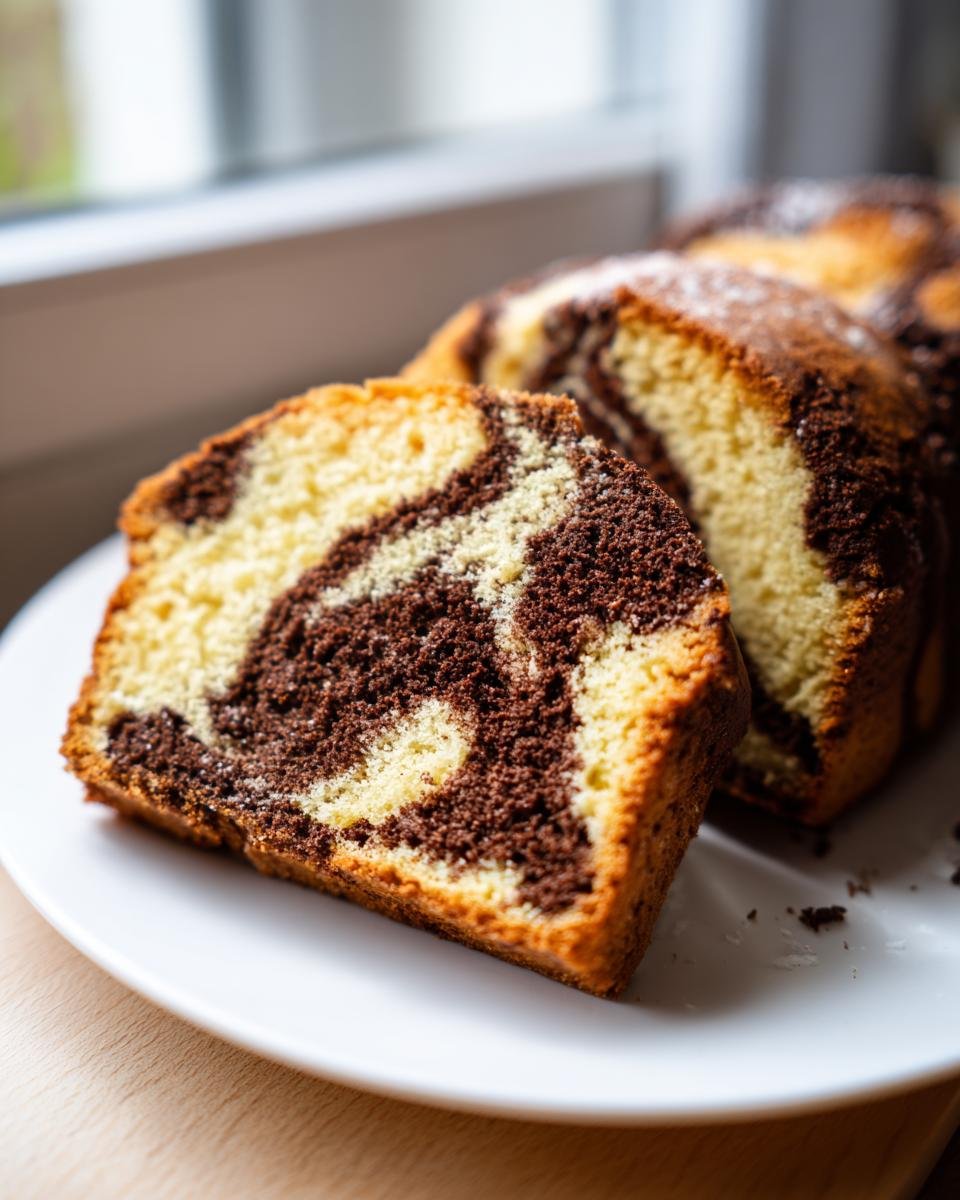
Also, a quick note on slicing: wait until it’s completely cool, even if you’re tempted to sneak a warm slice. This cake slices best when room temperature, giving you those clean, defined lines between the vanilla and the chocolate. If you ever feel like your simple loaf cakes need a little pick-me-up, I’ve experimented with adding a bit of coffee to the chocolate portion, which you can read about here in my notes on coffee cake variations.
Variations on the Classic German Marble Cake
While the original vanilla and chocolate pairing is classic for a reason, this loaf is such a perfect canvas for experimentation! You truly only need a few minor tweaks to give your *Marmorkuchen* a totally new personality. Don’t be afraid to play around once you’ve mastered the basic swirl technique.
My personal favorite little trick is adding lemon zest to the vanilla batter. It brightens everything up beautifully and cuts through the richness of the butter. Just grate the zest of one whole lemon right into your vanilla flour mixture before you start alternating it with the milk. It adds such a lovely fresh scent while baking. You can find some other fun flavor twists over in my guide to coffee cake creativity.
Another simple change? Swap that vanilla extract out for almond extract in the light batter, or perhaps use a tiny bit of orange extract instead. All these little additions make the cake feel brand new without messing with the fundamental structure of the loaf—which, as we know, is perfect!
Serving Suggestions for German Marble Cake
This cake is glorious all on its own, honestly. It doesn’t need a ton of fuss, which is why I love it for a Tuesday afternoon snack! The traditional German way, and my favorite, is to simply dust the completely cooled loaf with powdered sugar. It gives that slightly rustic, sweet finish without concealing the beautiful swirl pattern.
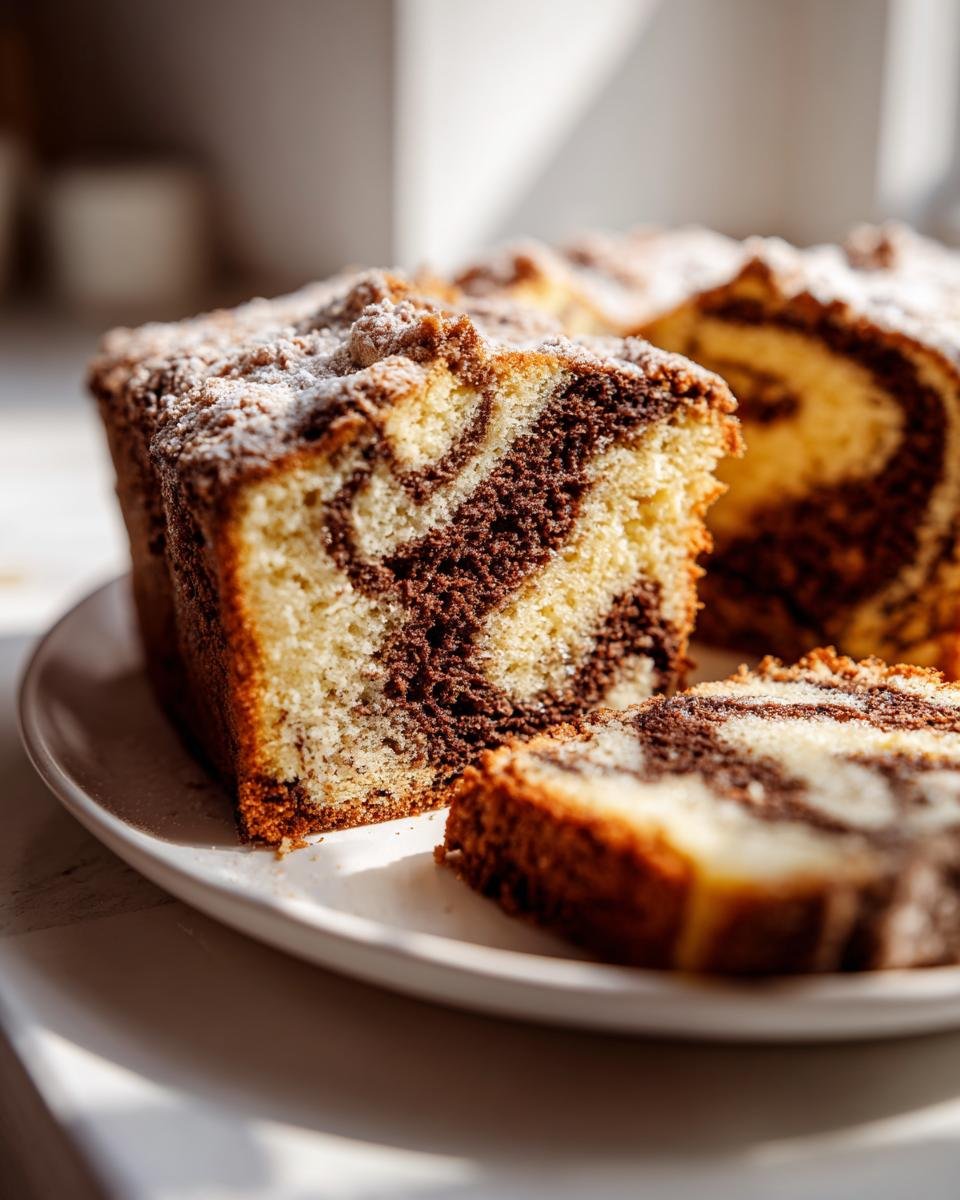
If you are serving it up for guests or maybe for brunch, it pairs perfectly with a strong, hot cup of coffee—the bitterness is just the right counterpoint to the sweet vanilla.
If the weather is warm, try serving a slice with a dollop of lightly sweetened whipped cream or maybe even a handful of fresh raspberries or strawberries. That little bit of tart fruit really wakes up the chocolate notes. If you want loads of topping ideas that still feel homey, check out my tips on handling rich pound cake toppings!
Storage and Reheating German Marble Cake
Storing this loaf is wonderfully easy because it’s already got such a great, sturdy crumb structure. Since this German Marble Cake doesn’t have any fussy frosting or cream cheese glaze, you can keep it right on the counter! Just make sure it’s wrapped tightly in plastic wrap or tucked inside an airtight container.
It stays perfectly fresh at room temperature for about three days. If you happen to know you won’t finish it that quickly, you can absolutely freeze it! Slice it first, wrap the slices individually, and pop them in the freezer for up to two months. To revive a frozen slice, just let it thaw on the counter for an hour or zap it in the microwave for about 15 seconds. Honestly, it’s one of the easiest cakes to store, unlike those delicate sponge cakes we sometimes attempt! If you want more ideas on making storage easier for various loaves, take a peek at my general tips here: quick bread storage hacks.
Frequently Asked Questions About *Marmorkuchen*
I always get so many questions after I post pictures of this loaf because everyone wants that perfect swirl! Baked goods always stir up curiosity, and I’m happy to clear up some of the common confusion spots I hear about when making this cake the first time.
See, the simplicity of a loaf cake often hides potential pitfalls—usually concerning how the two batters interact or how long they stay fresh. Here are a few things readers ask me about constantly. If you’re looking for some fun ways to turn this into something else, review my notes on adapting batter for a banana bread coffee cake!
Can I make this German Marble Cake recipe in a Bundt pan?
You certainly can, and it looks gorgeous in a Bundt pan! Since the Bundt pan is generally deeper and has more surface area than a standard loaf pan, you need to adjust your baking time. It will likely take a bit longer—maybe closer to 60 or 70 minutes.
Just like with any large cake, start checking at the 55-minute mark, but be prepared to let it stay in the oven longer. Make sure your pan is *super* well-greased because those bundt ridges can grab onto cake batter and refuse to let go!
What is the secret to a good marble effect?
The secret isn’t anything complicated, I promise. It comes down to two main things: consistency and restraint! First, make sure your batters are close in thickness. If the chocolate batter is way too loose because you added too much water, it will just sink to the bottom when you pour it in. Second, and this is the most common mistake, you have to resist the urge to mix it like crazy!
You only need to run your knife or skewer through the batter 3 or 4 times. Gentle, shallow passes across the top are what creates those distinct, beautiful lines. Over-swirling just homogenizes the mix, and then you lose the effect entirely!
Estimated Nutritional Data for German Marble Cake
Now, I know we aren’t baking this loaf because we’re chasing clean eating goals, but it’s always good to have a ballpark idea of what you’re enjoying! This nutritional breakdown is based on standard ingredient measurements and serving sizes, but remember, my baking amounts can vary wildly based on how generous I am with the butter, haha!
Seriously though, take these numbers as a friendly estimate. If you use light butter or skip the optional dusting of powdered sugar on top, your values will shift slightly. These figures assume one standard slice from the finished loaf.
- Serving Size: 1 slice
- Calories: 280
- Sugar: 25g (That rich sweetness from the brown sugar, yum!)
- Fat: 16g (That’s the butter talking!)
- Saturated Fat: 9g
- Carbohydrates: 30g
- Protein: 5g
- Sodium: 150mg
Remember, everything in baking is about balance. Enjoying a slice of this homemade German Marble Cake with your coffee is an experience, not a data point! Don’t sweat the small stuff when it tastes this fantastic.
Share Your German Marble Cake Creations
Alright, bakers, that’s the end of the line for the recipe, but the fun isn’t over yet!
I absolutely love seeing how my recipes turn out in your kitchens. Seriously, it makes my whole week when I get a message or see a tag on social media showing off someone’s first *Marmorkuchen*. Did you manage a perfect swirl on your first try? Did you dust it with sugar or get fancy with a drizzle?
Please, take a picture and tag me! I want to see your beautiful, striped loaves. Head over to the comments section right now and let me know how it went. Drop a rating down below—even a quick 5 stars tells me you loved this classic German bake! If you tried some flavor variation, let us all know, too. We’re all learning together here!
If you’re looking for something totally unexpected to bake next—maybe for tomorrow’s lunch instead of dessert—you absolutely have to try my cheesy BBQ stromboli recipe. It’s a total departure, but so much fun to make: BBQ Chicken Cheese Stromboli!
Print
German Marble Cake (Marmorkuchen)
- Total Time: 1 hr 15 min
- Yield: 1 loaf 1x
- Diet: Vegetarian
Description
A simple German cake featuring a swirl of vanilla and chocolate batter.
Ingredients
- 1 cup unsalted butter, softened
- 1 cup granulated sugar
- 4 large eggs
- 1 teaspoon vanilla extract
- 2 cups all-purpose flour
- 1 teaspoon baking powder
- 1/2 teaspoon salt
- 1/2 cup milk
- 2 tablespoons unsweetened cocoa powder
- 2 tablespoons hot water
Instructions
- Preheat your oven to 350°F (175°C). Grease and flour a loaf pan.
- In a large bowl, cream together the butter and sugar until light and fluffy.
- Beat in the eggs one at a time, mixing well after each addition. Stir in the vanilla extract.
- In a separate bowl, whisk together the flour, baking powder, and salt.
- Gradually add the dry ingredients to the wet ingredients, alternating with the milk, mixing until just combined. Do not overmix.
- Pour about two-thirds of the batter into the prepared loaf pan.
- In the remaining one-third of the batter, mix in the cocoa powder and hot water until smooth.
- Gently spoon the chocolate batter over the vanilla batter in the pan.
- Use a knife or skewer to gently swirl the two batters together to create a marble effect.
- Bake for 50 to 60 minutes, or until a wooden skewer inserted into the center comes out clean.
- Let the cake cool in the pan for 10 minutes before turning it out onto a wire rack to cool completely.
Notes
- You can dust the cooled cake with powdered sugar for a simple finish.
- For a richer flavor, use dark cocoa powder.
- Prep Time: 20 min
- Cook Time: 55 min
- Category: Dessert
- Method: Baking
- Cuisine: German
Nutrition
- Serving Size: 1 slice
- Calories: 280
- Sugar: 25
- Sodium: 150
- Fat: 16
- Saturated Fat: 9
- Unsaturated Fat: 7
- Trans Fat: 0
- Carbohydrates: 30
- Fiber: 1
- Protein: 5
- Cholesterol: 75
Keywords: German cake, marble cake, marmorkuchen, chocolate vanilla cake, loaf cake