
Honestly, sometimes the simplest things make the biggest difference in the kitchen. We all have those fancy spice racks that cost a fortune, but I swear, the real secret weapon in my pantry right now is this super basic, bright, zesty **Lime Salt** seasoning I whip up in five minutes flat. It’s not complicated, it’s just pure, electrifying citrus flavor mixed right into the salt. When I first tried making it, sprinkling it over a plain avocado just blew my mind—it instantly tasted like I had spent hours fussing over the perfect garnish!
Forget digging out limes every time you need a little pop. This recipe is instant brightness in a jar. It takes two ingredients, really, and the payoff is huge. Trust me, once you have your own little batch of this homemade salt, you’ll wonder how you ever cooked without it for things like tacos or even just boring old popcorn. It’s the easiest flavor upgrade I know!
Why You Need This Simple Lime Salt Seasoning
I really want you to try making this! It’s the definition of fast flavor. Seriously, you can’t beat the rush you get from using your own homemade seasoning. It elevates everything instantly.
- It’s ready faster than you can find a decent shaker of store-bought zest mix.
- The flavor is way brighter—you’re in total control of the citrus zing!
- You control exactly how much salt you use versus how much lime you want blasting out.
Quick Preparation Time for Lime Salt
This is the best part: it takes five minutes. Five minutes, start to finish! You’re not even heating up the stove. That means you can make a small test batch while the water boils for your pasta. If you’ve got five minutes, you’ve got homemade lime salt. No excuses!
Customizing Your Homemade Salt Flavor
Look, sometimes I want something aggressive for a rim on a margarita glass, so I lean heavier on the zest. Other times, maybe I’m using it on nuts and I want the salt to be the background player. You decide! The standard recipe is great, but don’t be afraid to use a little more or a little less lime zeal until it tastes exactly how you want it to taste.
Ingredients for Perfect Lime Salt
Okay, grabbing your ingredients is the easiest part here, which is why I love this recipe so much. It’s literally two things! But don’t let the simplicity fool you; the quality of those two things matters. You definitely need coarse salt—table salt gets too aggressively salty, too fast. I always use Kosher salt because it mixes beautifully.
Also, make sure your dried lime zest is vibrant. If it smells dusty or old, your flavor will be flat. If you happen to be whipping up a batch of my cilantro and lime dressing soon, use the extra zest here!
- 1/2 cup coarse salt (Kosher salt is my recommendation!)
- 2 tablespoons dried lime zest
Step-by-Step Instructions to Make Lime Salt
This is where the magic happens, and it truly couldn’t be faster. I encourage you to grab a bowl that you know is completely dry. Any little spot of water or residual oil is going to make your beautiful new **Lime Salt** start sticking together too soon, and we want this to last!
We aren’t cooking anything, so there’s zero fuss. You’re basically making a very fancy, very zesty pile of seasoned salt. It’s practically foolproof, but follow these two simple steps, and you’ll be sprinkling this everywhere!
Combining Ingredients for Your Lime Salt
First things first: get those two players into the bowl. I use a medium-sized glass bowl, just so I can see what I’m doing. Dump the coarse salt right in there, and then add the two tablespoons of dried lime zest right on top. That’s it! Seriously, the first ingredient is done before you even finish opening the zest container. Be careful when you pour the zest; sometimes it flies everywhere, and you don’t want to inhale any of that concentrated goodness!

Achieving Even Distribution in Your Lime Salt Mixture
Now you need to mix. I don’t just stir mine slightly; I really get in there. Use a small spoon or even a tiny whisk if you have one. I like to use a folding motion for the first minute, almost like I’m trying to incorporate air underneath the salt, which seems silly, but it helps break up any clumps the zest might form right away.
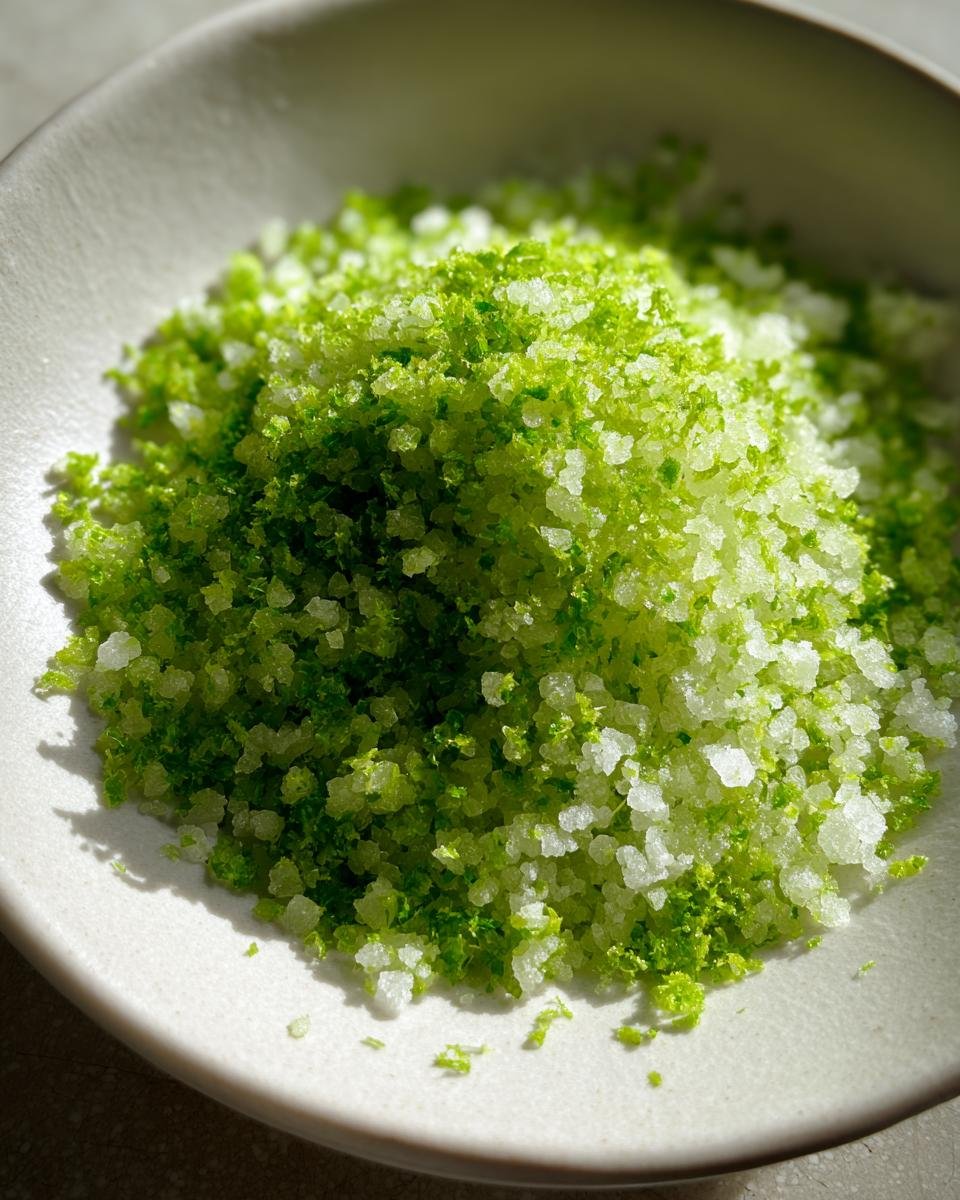
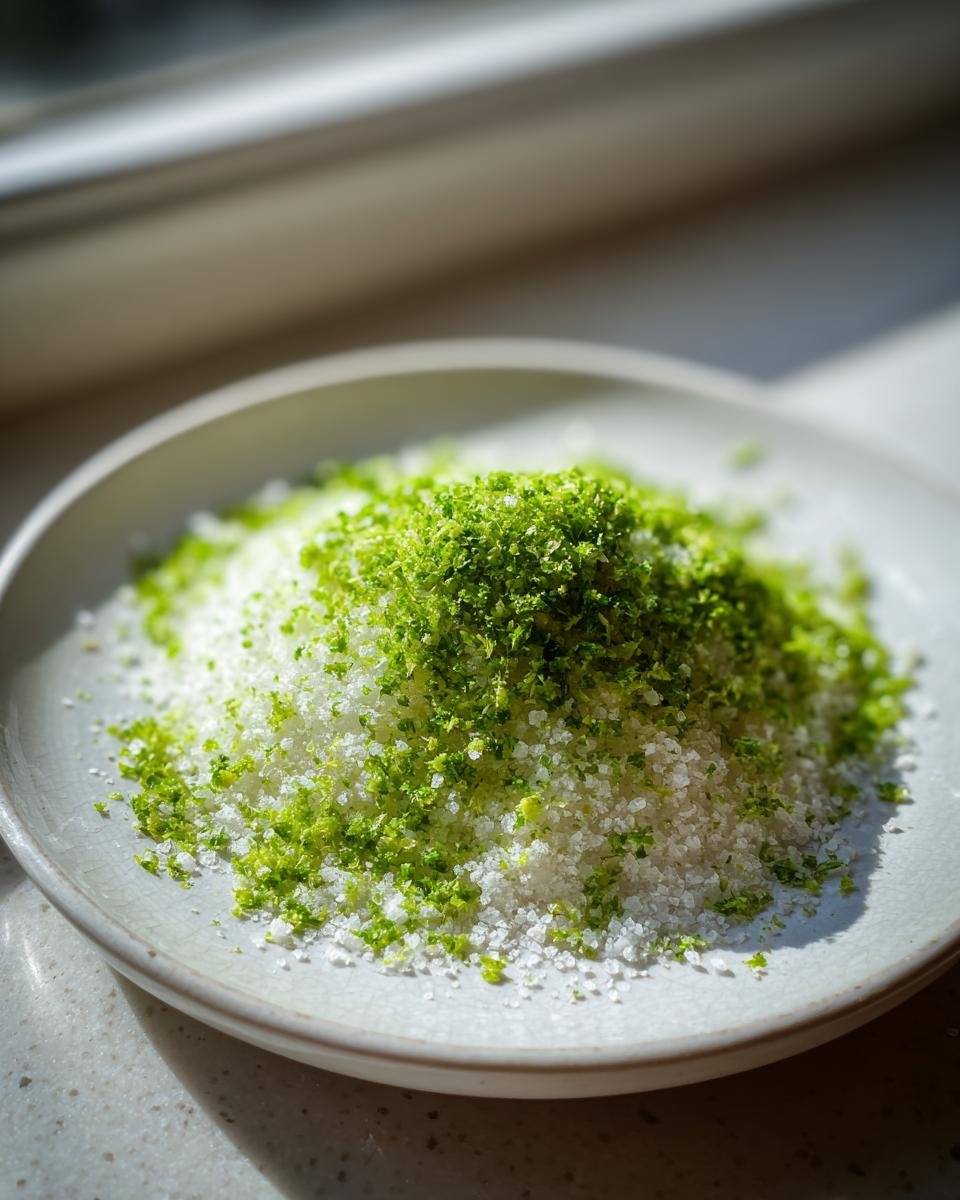
Keep mixing until you can’t see distinct piles of white salt or green zest. It should look like a uniform, pale green sandy texture. Once it looks consistently speckled, give it a taste! Remember, that seasoning note said you can adjust the ratio now. If it needs more punch, throw in another teaspoon of zest and mix it all again until it’s perfectly balanced for you. That’s how you get truly incredible homemade salt!
Expert Tips for Storing Your Lime Salt
Now that you’ve made this brilliant batch of concentrated flavor, you want to keep it happy and zingy for as long as possible, right? Keeping salt fresh is a little different than keeping dried herbs, but there are definitely a few things I swear by. The biggest enemy of any salt mix is moisture—if humidity gets in there, poof! You’ve got giant clumps instead of beautiful, sprinkle-ready seasoning.
My number one rule is using a container that seals tight. I mean really tight. I prefer small glass jars with screw-on lids, like the ones you use for canning or saving those tiny bits of leftover spices. Plastic containers are fine, but they don’t always keep out the dampness nearly as well as good old glass does.
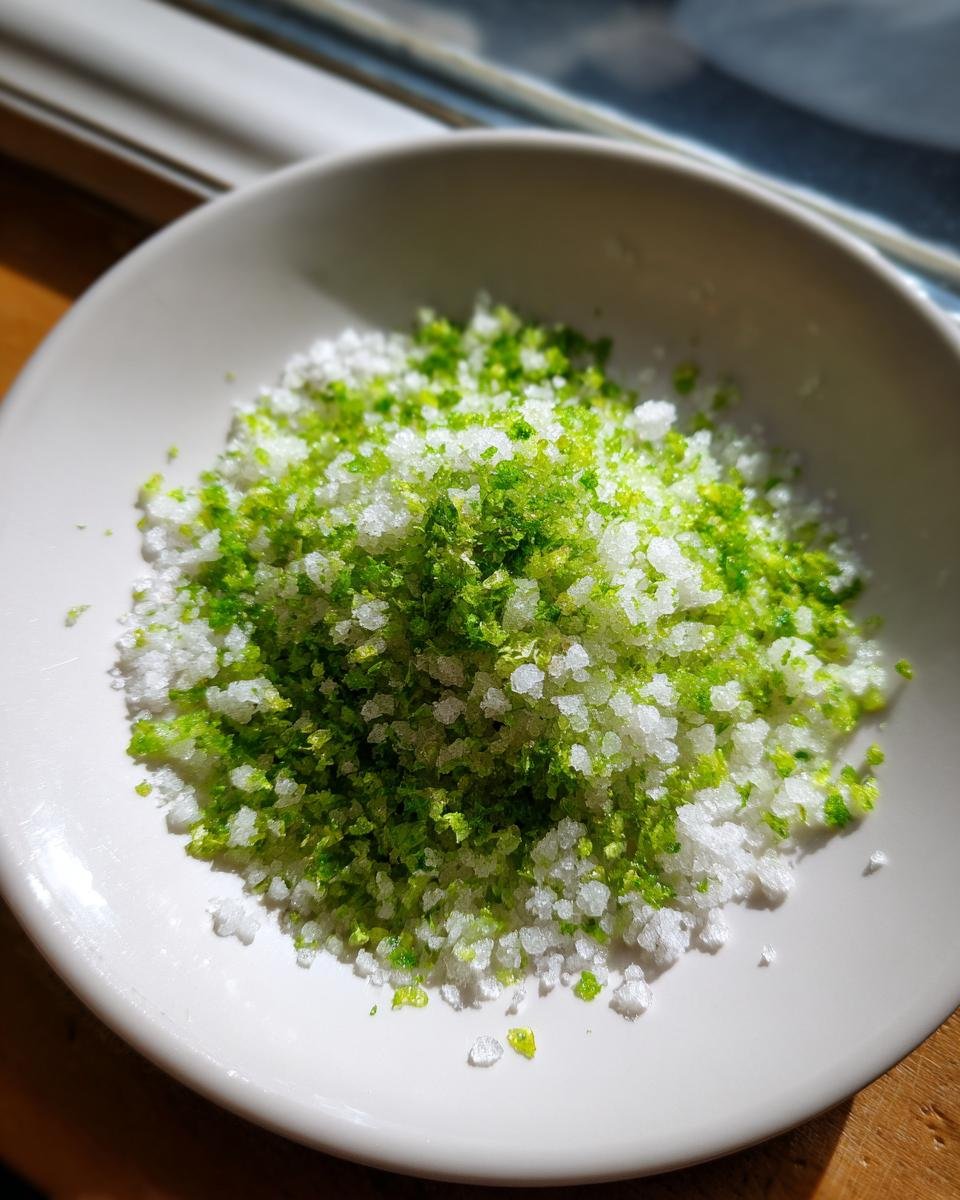
After you mix it, let the **Lime Salt** sit on the counter for about an hour, uncovered. This lets any tiny residual moisture from the zest evaporate before you seal it up. Then, store the jar in a cool, dark cabinet. Don’t put it right next to the stove where the heat fluctuates! If you’re thinking about freezing things, you might want to check out my notes on how I preserve fresh herbs, but for this dry salt mix, a dark cupboard is usually perfect.
Here’s the trick related to the zest you used: If you made this with the dried zest, you should be good for several months, easily! It stays potent. If, however, you went rogue and used fresh lime zest because you were in a real rush—which is delicious, by the way—you need to know that fresh zest means much more moisture. That batch should be treated more quickly, maybe used up within a week or two, or stored in the fridge to be safe. For long-term storage, stick to the dried stuff, trust me on this one!
How to Use Your Finished Lime Salt
Okay, now you have this gorgeous, zesty jar of seasoning. What do you even put it on? You know the obvious ones like tacos or grilled chicken, but let’s get creative, shall we? My favorite move right now—and I’m obsessed—is using it on fried eggs in the morning. It gives them this incredible little wake-up call that plain salt just can’t deliver.
If you’re making seafood, use this **Lime Salt** instead of plain sea salt right before serving. It’s magic on white fish or shrimp skewers. And for anyone making drinks: stop what you’re doing and use this to rim your cocktail glasses! It’s ten times better than standard salt because it brings that tart lime edge that works perfectly with tequila or gin.
Don’t forget the snacks! Popcorn gets an instant upgrade, obviously. But try sprinkling a tiny pinch over sliced cucumber or watermelon—it’s refreshing! Or, if you want to take your avocado situation up ten notches, use this instead of regular seasonings before you drizzle on something like my creamy avocado lime dressing. Seriously, this stuff is addictive, so be ready to make a bigger batch next time!
Troubleshooting Common Lime Salt Issues
Even with a recipe this simple, sometimes things go a little sideways, right? Don’t panic if your **Lime Salt** isn’t behaving exactly how you expected. Salt is tricky because it acts like a sponge for moisture, which is the number one enemy of any dry rub.
If you open up your jar and the salt corners look… sad and stuck together, that’s humidity winning the battle. It happens! Especially if you live somewhere sticky or if you accidentally introduced even a drop of water during the mixing process.
What To Do If Your Lime Salt is Clumping
Clumping is almost always about moisture getting trapped inside that airtight container. If you used dried zest and it’s only slightly clumpy, you can try spreading the mixture out thinly on a baking sheet and letting it air dry for an hour or two away from any direct sunlight or kitchen steam. After that, just break up the clumps with the back of a spoon or pulse it very briefly in a dry spice grinder—just a quick *whiz*!—to separate the grains again.
If the clumps are really solid and maybe even look wet, then unfortunately, that batch has absorbed too much moisture and the flavor might be starting to dull. Better to discard that one and make a fresh batch, making absolutely certain your bowl and spoon were bone dry this time around. Don’t try to ‘dry out’ wet salt by baking it; you’ll just end up with baked salt, which you don’t really want!
Why Does My Lime Salt Taste Flat?
If your salt isn’t clumping but it just tastes… brown, instead of bright, that means your lime zest has lost its essential oils, which is what gives you that ‘zing’ we’re looking for! This usually happens if the salt was stored in a clear jar near a sunny window. Sunlight just murders citrus flavor.
Remember what I said about the zest quality? If you used zest that was old, it’s going to taste stale. For the absolute brightest flavor possible, try this: take a small spoonful of your flat mix, add just a tiny pinch of fresh lime zest (even if you have to scrub a lime in a hurry!), mix it, and taste it. If the fresh zest wakes it up immediately, you know that batch needs to be used up quickly, or maybe you just need to add a bit more high-quality dried zest to refresh the whole jar. Always store your **Lime Salt** in the dark, and it’ll stay zesty for ages!
Frequently Asked Questions About Lime Salt
I get so many questions whenever I post this **Lime Salt** on social media, which totally tells me you guys are ready to ditch the boring stuff and try this simple seasoning! It’s the little things that make cooking fun, and these questions pop up all the time. Here are the things I hear most often when people try making their first batch of this citrus salt.
Can I substitute the dried lime zest in this Lime Salt recipe?
Oh, you absolutely *can*, but you need to know what you’re getting into! Lime zest is super unique, right? It’s tart and a little floral. If you use lemon zest, you’ll get a lovely citrus salt, sure, but it will taste distinctly like lemon, which is brighter and less deep than lime. Orange zest is going the wrong direction flavor-wise—it’s sweeter.
If you use a substitute, remember to taste as you go! Different dried zests have different strengths. Also, if you substitute with something extremely moist like dried orange peel (which is often oilier than lime zest), you might need to adjust your storage time and keep it in the fridge. For the pure experience outlined in the main recipe, dried lime zest is king, but homemade salt is all about experimentation!
What is the best salt to use for making Lime Salt?
This is one of those moments where I sound like a total salt snob, but I promise it makes a difference! Please, avoid standard table salt if you can. Table salt is processed so finely that it dissolves almost instantly, which means your mixture can taste shockingly salty right away, and it packs down way too hard in the jar.
I always, always, always recommend coarse salt. Kosher salt is my favorite because the flakes are irregular, which helps them grab onto the dried zest particles so the mixture looks more even. If you use coarser sea salt, that works beautifully too! Just remember that the coarser the grain, the better your homemade salt will flow and the less likely it is to clump up on you when stored.
Since we are using such a small amount of zest, we want the salt to be the carrier, not the star that overwhelms the palate. If you make a bigger batch, maybe try getting some pink Himalayan sea salt for the next time and see how that looks—different colors always make things feel fancier! If you enjoyed making this simple seasoning, you might also love how I layer flavors in my Italian dressing to bring depth!
Nutritional Estimates for Lime Salt
Now, here’s the deal with nutrition for something like **Lime Salt**: since it’s just salt and dried zest, it’s pretty straightforward, but you always have to remember that this is an estimate! I’m calculating this based on the fact that this recipe yields about half a cup, and a single teaspoon serving size is what most people use when seasoning food. It’s not a nutritional powerhouse, obviously, since it’s a condiment, but it’s good to know what you’re sprinkling around!
These numbers look tiny for a reason! You aren’t eating a whole bowl of it; you’re using a pinch here and there. These figures assume you’re using the full yield of the recipe (about 1/2 cup) and dividing that into 1-teaspoon servings. So, when you look at the sodium, remember that one single sprinkle is only a tiny fraction of that number. It’s all about context when you’re working with *homemade salt*!
Here is the breakdown for a standard 1-teaspoon serving of this seasoning:
- Calories: 0
- Sodium: 1150mg (This is why you taste before you sprinkle!)
- Fat / Saturated Fat / Trans Fat: 0g
- Cholesterol: 0mg
- Carbohydrates / Fiber: 0g
- Protein: 0g
See? Mostly sodium, as expected, since that’s the primary ingredient! But zero sugar, zero fat—that’s another win for simplicity in my book. Just be mindful of that sodium number when you’re seasoning something like avocado toast, okay? A little goes a long way!
Share Your Lime Salt Creations
Alright, now that you’ve got this bright, zesty **Lime Salt** sitting on your counter, I absolutely want to hear about it! I thrive on knowing what you all are doing with these simple recipes. Did you rim a glass like I suggested? Did you sprinkle it over something totally unexpected and discover a new favorite flavor combination?
Don’t just make it and forget it! Please, come back here and tell me how it went. Leaving a rating tells me the recipe worked well for you, and leaving a comment helps other cooks know what to expect. I read every single comment you leave, and I love seeing what you create!
If you snap a picture of your perfectly seasoned fish or that killer margarita rim, tag me on social media! Seeing your beautiful creations makes my entire week. It’s all about building this little community of cooks who love simple, powerful flavors. If you have any burning questions that I somehow missed, shoot me a message through my contact page.
Go sprinkle that amazing flavor everywhere, and let me know what you think. Happy seasoning!
Print
Simple Lime Salt Seasoning
- Total Time: 5 min
- Yield: About 1/2 cup 1x
- Diet: Vegetarian
Description
A basic recipe for making homemade lime salt seasoning.
Ingredients
- 1/2 cup coarse salt
- 2 tablespoons dried lime zest
Instructions
- Combine the coarse salt and dried lime zest in a small bowl.
- Mix the ingredients thoroughly until the zest is evenly distributed throughout the salt.
- Store the mixture in an airtight container.
Notes
- You can adjust the ratio of salt to lime zest to match your taste preference.
- Use fresh lime zest if you plan to use the mixture within a few days.
- Prep Time: 5 min
- Cook Time: 0 min
- Category: Condiment
- Method: Mixing
- Cuisine: General
Nutrition
- Serving Size: 1 tsp
- Calories: 0
- Sugar: 0g
- Sodium: 1150mg
- Fat: 0g
- Saturated Fat: 0g
- Unsaturated Fat: 0g
- Trans Fat: 0g
- Carbohydrates: 0g
- Fiber: 0g
- Protein: 0g
- Cholesterol: 0mg
Keywords: lime salt, seasoning, homemade salt, citrus salt